
Why Short-Let Owners Should Think Like Hoteliers
Lagos's short-let apartment market has grown fast, but not every owner running one is treating it as seriously as the guests booking it expect. A guest paying ₦40,000–₦150,000 a night for a Lekki or Ikoyi short-let is comparing the experience, consciously or not, to a well-run boutique hotel — clean, responsive, and professionally managed. Owners who apply hotel-grade standards to housekeeping, communication, and pricing consistently earn better reviews, higher occupancy, and can often charge premium rates compared to competitors running the same square footage more casually.
The good news is that you do not need a hotel-sized team to apply hotel-grade discipline. You need consistent systems, even for a single unit.
Standardizing Housekeeping and Turnover
The single biggest differentiator between an amateur short-let and a professional one is turnover quality — how consistently the unit is cleaned, restocked, and inspected between guests. Build a written checklist covering every room: bedding changed and inspected, bathroom restocked with toiletries and fresh towels, kitchen fully cleaned including appliances, and a final walk-through photo taken before every check-in. This is exactly the housekeeping discipline hotels train staff on, and it is just as achievable for a single-unit short-let owner using a cleaner and a checklist as it is for a 200-room hotel using a full housekeeping department.
Set a realistic turnover window — most Lagos short-lets need three to five hours between checkout and the next check-in for a proper clean — and never compromise on it just to accept a same-day booking, since a rushed turnover is the fastest way to earn a bad review.
Guest Communication and Check-In Systems
Professional hotels respond to guest inquiries within minutes, not hours, and short-let owners should hold themselves to the same standard, since OTA platforms like Airbnb and Booking.com actively reward hosts with faster response times through better search placement. Build message templates for common questions — check-in instructions, WiFi details, parking information, house rules — so responses are fast and consistent regardless of who is answering (you, a co-host, or a property manager).
Self-check-in systems, such as smart locks with unique guest codes, reduce friction significantly and eliminate the need to be physically present for every arrival, which matters if you are managing more than one unit. Whichever check-in method you use, send a clear message 24 hours before arrival and another with practical details on arrival day — this single habit prevents most check-in complaints before they happen.
Managing Multiple OTA Listings
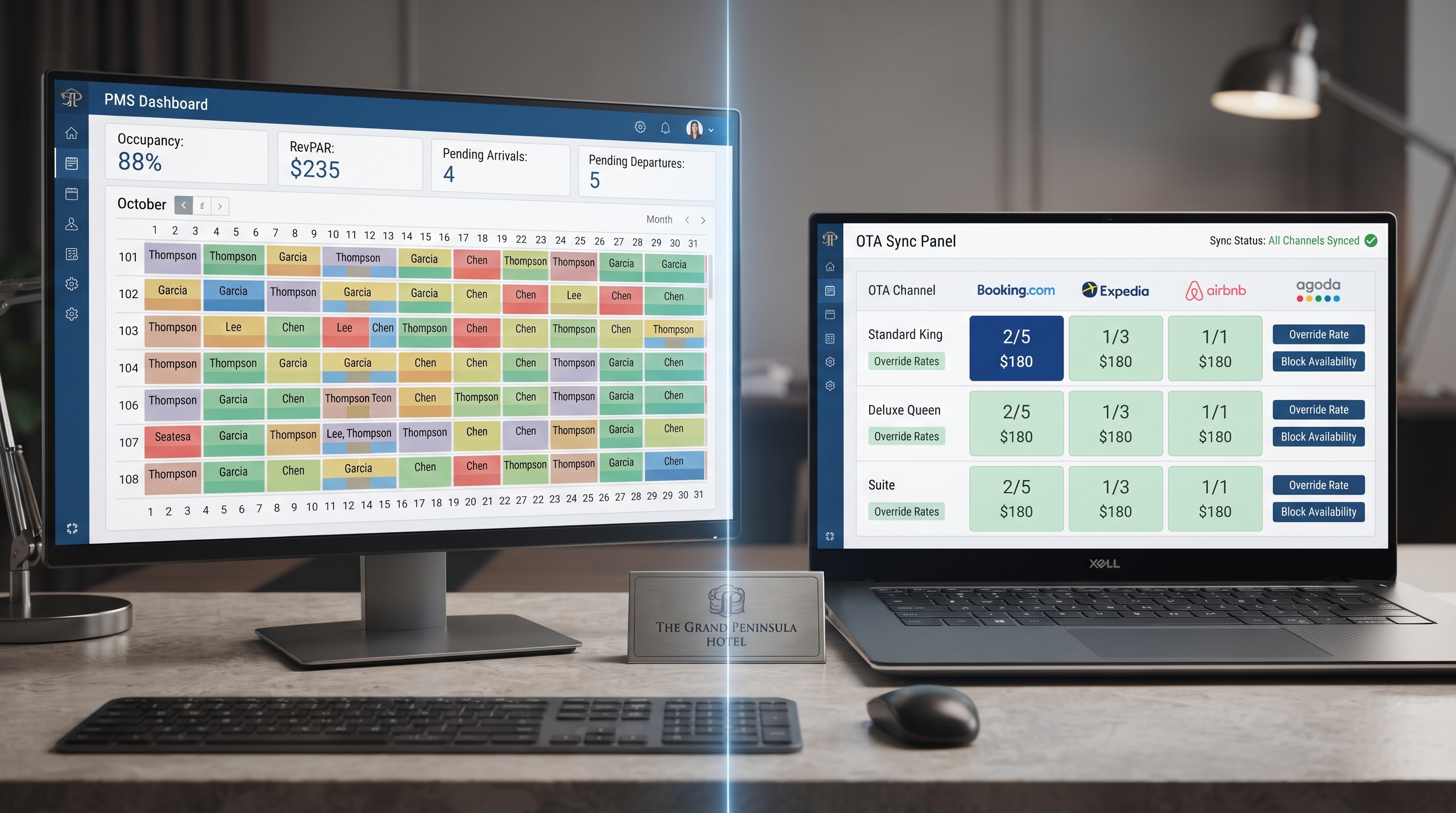
If your unit is listed across Booking.com, Airbnb, and Expedia simultaneously — which is increasingly standard practice to maximise visibility — keeping availability and pricing synced across all three is essential to avoid double-bookings. A dedicated channel manager or a lightweight cloud-based property management system, such as Cloudbeds, syncs your calendar automatically across platforms, which becomes necessary once you manage more than two or three units manually through separate apps.
Each platform also has its own strengths worth using deliberately: Airbnb tends to attract longer stays and leisure travellers, Booking.com pulls in more business and last-minute travellers, and Expedia adds reach for international guests. Listing across all three, with synced pricing and availability, maximises your booking pipeline rather than relying on a single channel's algorithm.
Pricing and Revenue Management for Short-Lets
Hotels adjust room rates dynamically based on demand, day of week, and local events — and short-let owners should do the same rather than setting one fixed price and leaving it unchanged year-round. Raise rates during high-demand periods (Detty December, major Lagos events, festive weekends) and lower them modestly during quieter periods to protect occupancy. Most OTA platforms offer built-in dynamic pricing tools, or you can adjust manually based on your own tracked occupancy patterns over a few months.
Handling Guest Relations and Reviews
Reviews make or break a short-let listing in a way many owners underestimate — a small handful of negative reviews early on can suppress a listing's visibility for months. Treat every guest complaint the way a hotel guest relations team would: respond quickly, acknowledge the issue directly, and offer a genuine resolution rather than a defensive reply. Publicly responding to reviews, even positive ones, signals to future guests that the property is actively and professionally managed.
When to Bring In Trained Hospitality Staff
Once you are managing more than two or three units, or simply want your existing unit run to a higher standard without personally handling every check-in and guest message, it becomes worth hiring someone with genuine hospitality training rather than an untrained caretaker. Someone who understands front office communication standards, housekeeping discipline, and OTA management brings exactly the skill set a growing short-let portfolio needs — which is precisely what VAA Global's Hospitality Management course trains students to do.
Run Your Short-Let Like a Real Hospitality Business
Whether you own a single unit or a growing portfolio, applying real hospitality discipline — housekeeping standards, fast guest communication, synced OTA management, and smart pricing — is what separates a side hustle from a genuinely profitable business. If you want to build these skills yourself, or hire someone who already has them, explore the Hospitality Management course or message VAA Global on WhatsApp at 09121158938.